When you’re sourcing products from China or elsewhere in Asia, the gap between what you ordered and what arrives at your warehouse is one of the most expensive problems in international trade. Third party quality inspection exists specifically to close that gap – but not every importer uses it, and not every importer who uses it uses it correctly. This guide covers what third party quality inspection in China actually involves, the real reasons importers choose it, and the legitimate concerns that lead some to avoid it.
What Is Third Party Quality Inspection in China?
Third party quality inspection means hiring an independent company – one that has no financial relationship with either the buyer or the factory – to verify product quality, quantity, and compliance before goods are shipped.
The “third party” distinction matters. A factory’s own QC staff has an obvious conflict of interest: they work for the supplier, not the buyer. A buyer’s own employee traveling to the factory is expensive and logistically difficult to scale. A third party inspector sits between both parties, with no incentive to favor either side.
There are four main types of inspections used in China sourcing:
- Pre-production inspection (PPI) – checks raw materials and components before manufacturing begins
- During-production inspection (DPI) – checks goods at an intermediate stage, when roughly 20–80% of the order is complete
- Pre-shipment inspection (PSI) – the most common type; checks finished goods before they leave the factory
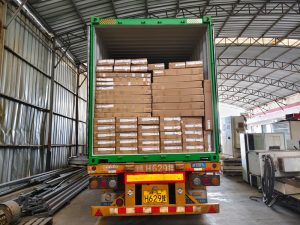
- Container loading inspection (CLS) – verifies goods are loaded correctly to prevent transit damage
Each inspection typically covers quality control against your specifications, quantity verification, compliance checks against relevant regulations, and packaging and labeling accuracy.
What Does Third Party Inspection in China Cost?
Inspection pricing in China is based on a man-day model – one inspector, one day, one factory. Rates typically range from $149 to $320 per man-day, depending on the inspection company, the product category, and the factory location.
A standard man-day covers:
- Travel to and from the factory (often one hour or more each way)
- Preparing the inspection area
- Drawing a random sample using AQL (Acceptance Quality Limit) sampling
- Physically checking and testing the sampled units
- Writing and submitting the inspection report
One important note: the inspection fee should always include the report, photographs, and standard sampling. If a company charges extra for the report or photographs, treat that as a red flag.
For importers with tight budgets, the man-day model is actually an advantage – you only pay when you need an inspection, with no retainer or long-term contract required.
Why Some Importers Choose Not to Use Third Party Inspection
There are legitimate reasons why some importers hesitate to outsource quality control. Understanding them honestly is more useful than dismissing them.
Inspector Rotation Creates Inconsistency Concerns
Some importers want the same inspector checking their goods every time. The concern is straightforward: a different inspector each time means product knowledge has to be rebuilt from scratch, which could lead to inconsistent results.
This concern is valid in principle. In practice, established third party inspection companies address it through structured product briefings, standardized checklists, and detailed inspection criteria that travel with the order – not with the individual inspector. The information doesn’t live in one person’s head.
There is also a stronger argument for rotation: an inspector who visits the same factory repeatedly can develop relationships with factory staff that compromise their objectivity. Rotation is a deliberate integrity control, not a weakness.
Limited Direct Access to the Inspector
When working with a third party QC company, importers typically communicate with a client manager or account manager – not directly with the inspector on the factory floor. For importers used to direct communication, this extra layer can feel like a loss of control.
In practice, this structure often improves communication rather than degrading it. Client managers at professional inspection companies are typically bilingual, culturally fluent in both the buyer’s market and the manufacturing environment, and experienced at translating technical requirements into actionable inspection criteria. A direct conversation with a factory-floor inspector who may have limited English is often less reliable than a structured briefing through a qualified intermediary.
Why Most Importers Who Use Third Party Inspection Keep Using It
1. Bilingual Communication Reduces Misunderstanding
The language gap between international buyers and Chinese factories is a genuine source of quality problems – not because factories are dishonest, but because specifications that seem clear in English can be interpreted differently when translated into production instructions.
Client managers at professional inspection companies bridge this gap in both directions: they translate your requirements accurately into the local language, and they translate what they find at the factory back to you in terms you can act on. This is more reliable than relying on a factory’s own English-speaking sales contact, who has an interest in presenting results favorably.
2. Independent Verification Reduces Integrity Risk
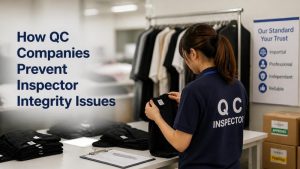
Supply chain integrity issues are more common than most importers want to acknowledge. They rarely take the form of obvious bribery. More often, they look like a factory offering lunch to an inspector, providing transportation, or building a friendly relationship over repeated visits – small gestures that gradually compromise objectivity.
Professional third party inspection companies address this through:
- Inspector rotation policies that prevent any one inspector from becoming too familiar with a specific factory
- Strict gift and gratuity policies that prohibit inspectors from accepting anything from factory staff
- Remote report review by technical staff in the home office before the report is issued to the client
No system eliminates integrity risk entirely. But the structural controls at a professional inspection company are significantly more robust than those available to a buyer managing their own in-house inspector.
3. Flexibility With No Long-Term Commitment
Third party inspection is typically available on a per-order, as-needed basis. You book when you have an order that needs checking – no retainer, no annual contract, no obligation when you have a quiet period.
This flexibility extends to the inspection itself. You can specify the format of the report, the testing methods to be used, the AQL levels that define pass/fail, and any product-specific checks that matter for your category. A professional inspection company will build these requirements into a product-specific checklist that travels with every order.
4. Lower Cost Than the Alternatives
The comparison that matters is not “inspection fee vs. zero” – it is “inspection fee vs. the cost of a quality failure.”
Consider the alternatives:
- Traveling to the factory yourself means international flights, hotels, and days away from your business – for a single order
- Hiring a full-time in-house inspector means salary, benefits, and coverage gaps when that person is unavailable or needs to travel across a large country
- Relying on the factory’s own QC means accepting a report from a party with a direct financial interest in passing the order
Third party inspection companies maintain networks of locally-based inspectors across China and Asia. An inspector based in Guangzhou covers a Guangdong factory at a fraction of the cost of flying someone in from overseas. The same network covers factories in Vietnam, Bangladesh, or India without requiring you to maintain staff in each country.
5. Related Services Under One Roof
Many importers start with pre-shipment inspection and expand into a broader quality management relationship over time. Professional inspection companies typically offer factory audits, during-production inspections, laboratory testing coordination, and social compliance audits – all bookable through the same account manager who already knows your product requirements.
Having a single point of contact who understands your product, your quality standards, and your supplier base is a meaningful operational advantage as your sourcing volume grows.
When Third Party Inspection Is Most Critical
Not every order carries the same risk. Third party inspection delivers the most value in these situations:
- First orders with a new supplier – no production history, no established trust
- New product introductions – new tooling, new components, no baseline quality data
- High-value or high-volume orders – where a quality failure is financially significant
- Regulated product categories – electronics, toys, apparel, food contact items, where compliance failures carry legal consequences
- Long lead time orders – where catching a problem at the factory is the only way to avoid a missed season
Choosing the Right Third Party Inspection Company in China
Not all inspection companies operate to the same standard. When evaluating options, look for:
- Industry experience with your specific product category
- Geographic coverage that matches your supplier base
- Sample reports – a professional company will share these without hesitation
- Clear pricing with no hidden fees for reports or photographs
- Transparent policies on inspector rotation and integrity controls
- Responsive communication – your account manager should be reachable and proactive
The inspection report itself is the deliverable. Before committing to a company, ask to see a sample report from your product category. It should cover quality findings, quantity verification, packaging checks, and photographs – in enough detail that you can make a clear ship/hold decision.
Frequently Asked Questions
How far in advance should I book a third party inspection in China?
Most professional inspection companies can schedule an inspection within 24–48 hours of booking. For busy periods – Chinese New Year, Golden Week, peak season – book earlier.
- What happens if the inspection fails?
The inspection company issues a report detailing the defects found and the AQL result. You then decide whether to accept the shipment, require the factory to rework specific units, or hold the order pending re-inspection. The inspection company does not make that decision for you – they give you the information to make it yourself.
- Can I use third party inspection for factories outside China?
Yes. Professional inspection companies typically cover Vietnam, Bangladesh, India, Cambodia, and other major sourcing countries through the same network.
- Does third party inspection replace a factory audit?
No. A factory audit evaluates the factory’s capability, processes, and quality management systems – it answers “can this factory make my product reliably?” A product inspection answers “did this specific order meet my requirements?” Both serve different purposes and are most effective when used together.
AQI SERVICE provides pre-shipment inspection, during-production inspection, factory audits, and laboratory testing for importers sourcing from China and across Asia.
Request a Quote from AQI SERVICE →