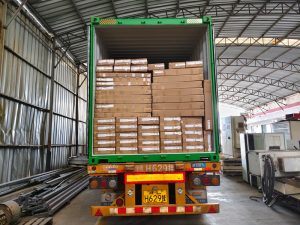
We get some version of the same question from exporters shipping into the EU: does our packaging actually need to be tested for PPWR, or is that still a few years off? By the time the question comes up, the shipment is often already booked. August 12, 2026 is the date the EU’s Packaging and Packaging Waste Regulation moved from future law to enforced law. Its heavy metal and PFAS limits already apply to any packaging placed on the EU market. This piece covers what PPWR compliance actually requires today: what a packaging inspection verifies on-site, and where lab testing fits in alongside it, not the parts that are still years away.
What PPWR Compliance Actually Covers on the Factory Floor Today
The assumption we correct most often on the inspection floor: packaging made before August 12 still gets a pass. It doesn’t. PPWR applies based on when packaging is placed on the EU market, not when it was produced. A shipment that clears EU customs on August 13 or later has to meet PPWR’s substance limits, regardless of when it rolled off the line.
A factory that’s shipped the same packaging for years treats it as proven. In most cases it has never actually been tested against PPWR’s combined heavy metal limit, because that limit predates the packaging line itself. The fix at that point is a pre-shipment substance screen, not a redesign. It costs a few hundred dollars and takes a few days. A container flagged at an EU port costs the return freight, the storage fees, and either a re-export or a destruction order.
Scope catches people out just as often. PPWR’s three packaging tiers, primary, secondary, and tertiary, all fall under the same substance limits. “It’s just the outer carton” is the argument we hear most for treating tertiary packaging as out of scope. It’s still fully in scope for heavy metal and PFAS limits, even though it never touches the end consumer.
A few categories do sit outside PPWR entirely: permanent containers like toolboxes, components with the same service life as the product they’re part of (an electric toothbrush’s charging base), and the body of personal protective equipment, though a mask’s individual wrapper still counts as packaging. Medical and pharmaceutical packaging gets exemptions on recyclability rules, not on the heavy metal or PFAS limits.
One more rule worth knowing early, even though it doesn’t apply yet: e-commerce packaging will eventually face a 50% empty-space limit, but only from January 1, 2030. We don’t test against it today. If you ship through Amazon or similar channels into Europe, it’s worth designing toward now rather than waiting.
The Two Substance Checks Enforced Right Now
Everything enforced under PPWR today comes down to Article 5: two substance categories, heavy metals and PFAS. Both apply regardless of what’s still years off under the recyclability rules in Article 6.
This part is lab chemistry, not something anyone can check by eye during a factory walkthrough. A packaging inspection itself verifies documents, labeling, and that the physical packaging on the pallet matches what was tested and declared. The heavy metal and PFAS testing behind those documents is a separate step: samples get pulled and sent to an accredited lab, either arranged by the factory directly, or, for exporters who’d rather not manage that themselves, arranged by an inspection company alongside the regular pre-shipment visit.
| Substance | Limit | Applies to |
|---|---|---|
| Lead, cadmium, mercury, hexavalent chromium | 100 mg/kg, combined (Article 5(4)) | All packaging, every material and tier |
| PFAS, total organic fluorine | 50 ppm (screening threshold) | Food-contact packaging |
| PFAS, total targeted compounds | 250 ppb | Food-contact packaging |
| PFAS, any single compound | 25 ppb | Food-contact packaging |
Heavy Metals: One Combined Limit, No Exceptions by Material
 This isn’t a new limit. It carries over from the 1994 Packaging Directive, and Article 5(4) now enforces it directly across all 27 member states. Two things trip factories up in practice:
- A supplier quoting a low number for one metal doesn’t clear the packaging on its own. The 100 mg/kg cap is combined across all four metals, not a per-substance allowance.
- Composite packaging needs to be tested layer by layer. A laminate with a plastic film, foil, ink, and adhesive layer can’t be ground into one averaged sample, since an average can hide a single non-compliant layer.
ICP-OES or ICP-MS testing covers this. Results usually come back in three to five working days, so the timeline fits comfortably around a routine pre-shipment inspection booking rather than delaying it.
PFAS: A Three-Tier Limit for Anything That Touches Food
PFAS is the harder half to get right, and the one factories are least prepared for. It shows up in grease-resistant coatings: fast-food wrappers, paper cups, pizza boxes, popcorn bags, and the inner liner of cartons like Tetra Pak. PPWR treats anything that could plausibly touch food as food-contact packaging, including a takeaway bag’s inner layer.
A supplier’s assurance that a coating is “PFAS-free” isn’t a test report. Article 16 puts the obligation on the packaging supplier to hand over documentation, heavy-metal and PFAS test data, or recycled-content records, that lets the buyer establish compliance. Plenty of suppliers outside the EU don’t have this on file yet, which is usually the point where independent lab testing ends up filling the gap.
The practical approach is to screen everything cheaply first, using total fluorine or combustion ion chromatography, and only send flagged samples for full LC-MS/MS analysis. PFAS testing also overlaps with REACH’s SVHC testing infrastructure, so a lab already running REACH work usually has the equipment for both.
The Paper Trail Behind PPWR Compliance
A passing lab result doesn’t finish the job. Anyone placing packaging on the EU market needs a Declaration of Conformity. They need to keep it, along with the technical file behind it, for at least five years for single-use packaging, or ten years for reusable packaging.
A complete DoC names the responsible party, describes the packaging accurately, cites the specific PPWR provisions it’s certifying against, and lists the test standards and lab that issued the reports. The technical file behind it covers the bill of materials, the full set of test reports, a risk assessment, supplier compliance records, and labeling documentation. None of this gets pre-approved by anyone, but EU authorities can request it with 10 working days’ notice, and an otherwise-compliant product can still get penalized if the paperwork isn’t ready in time.
Responsibility splits by role, not by who happens to run the physical inspection:
- Manufacturer: whoever produces the packaging, responsible for substance compliance and the Declaration of Conformity itself
- Importer: the EU-based entity bringing the goods in, responsible for verifying the manufacturer’s documentation before market entry
- Brand Owner: whoever’s name is on the product, carrying obligations similar to the manufacturer’s even if a contract factory did the physical production
For a Chinese factory acting purely as an OEM producer, the practical job is making sure the test reports and technical file travel with the goods accurately, and that they match the physical packaging on the pallet before the container leaves. A pre-shipment inspection is the natural point to check that, rather than finding a mismatch after the container is already sitting at a European port.
Folding PPWR Compliance Into a QC Process You Already Have
 None of this requires a new department. It fits into inspection stages most exporters already run, as long as the lab-testing piece and the on-site verification piece stay clearly split. If you don’t already have a packaging QC structure in place, our packaging quality control checklist covers the physical side (carton strength, drop and vibration testing, labeling) that PPWR’s substance checks sit alongside.
Incoming inspection (IQC): arrange heavy metal and PFAS screening on raw packaging materials, run through a lab in parallel with the physical checks already done at this stage. Ask for batch-level supplier declarations on anything going into EU-bound packaging.
In-process control (IPQC): watch for material mix-ups during changeovers. Printing inks and adhesives carry their own heavy metal and PFAS risk, and get missed more often than the base substrate does.
Outgoing inspection (OQC): confirm the packaging matches the technical file, the labeling is complete, and the Declaration of Conformity and test reports are current. This is a document and physical-match check, not a re-test.
Third-party verification: for exporters without an in-house lab, this splits into two parts within an existing pre-shipment or during-production inspection. The inspector verifies the Declaration of Conformity, test reports, and labeling on-site, and checks that the physical packaging matches what’s declared. Separately, packaging samples get pulled during the same visit and sent out to an accredited lab for the actual heavy metal and PFAS analysis. Either can also be arranged as a standalone service if a client just wants the lab testing handled without a full inspection. The combined result is also the version an EU buyer tends to trust more, since it comes from neither the factory nor the importer.
One lab panel can usually cover PPWR’s heavy metal and PFAS limits, REACH’s SVHC restrictions, and food-contact migration requirements in a single submission, instead of three separate ones.
What’s Coming After 2030
The substance limits above are the part enforced today. PPWR’s bigger structural shift, Article 6’s recyclability grading system plus recycled-content minimums, phases in starting 2030, and it’s easy to file that under “later.”
Packaging will eventually be graded A, B, or C. Grade A means 95% or higher recyclability, B means 80% or higher, C means 70% or higher. Anything below Grade C gets banned outright from January 1, 2030. Grade C itself stays legal past that date, but only until 2038. At that point the minimum rises to Grade B, and C-grade packaging, typically multi-layer composites and hard-to-separate coated materials, gets phased out too. Developing and validating an alternative material realistically takes 18 to 36 months, which makes 2030 a shorter runway than it sounds.
Recycled-content minimums follow their own schedule and vary by packaging category rather than one flat number. (The EU’s Omnibus simplification proposal may still revise these figures, so confirm the latest numbers before publishing rather than treating this version as final.) Food-grade recycled plastic, particularly rPET, already runs 20 to 50% above virgin material pricing with tight supply. Building a traceable, food-safe recycled-material supply chain, with performance and migration testing included, typically takes six to twelve months on its own.
Questions We’re Getting About PPWR Compliance
I’ve already done REACH testing. Do I still need separate PPWR testing? Yes. REACH’s general disclosure threshold sits around 0.1% by weight. PPWR’s combined heavy-metal limit works out to roughly 0.01%, ten times stricter. Passing REACH doesn’t mean the packaging clears PPWR.
My product isn’t food. Does the packaging still need PFAS testing? The strict tiered PFAS limits apply specifically to food-contact packaging. Non-food packaging isn’t held to those exact thresholds, but PPWR’s general restricted-substance rules still apply, and REACH’s own PFAS restrictions cover all products regardless of food contact. A risk screen is still worth running.
How long does a test report stay valid? PPWR doesn’t set a fixed shelf life. In practice, a report holds up as long as the material, supplier, and process behind it haven’t changed. Any change, including printing method or lamination process, should trigger a retest. High-risk materials like fluorine-coated papers are worth re-checking every six to twelve months regardless.
What happens if packaging fails PPWR testing? Depending on severity: customs detention, forced return or destruction at the exporter’s cost, market withdrawal of stock already sold, fines set by the individual member state, and in serious cases, flagging on an EU non-compliance list that follows a company into future shipments.
What are the labeling requirements? Material identification is required now: resin codes for plastics, or labels like “Paper,” “Aluminium,” “Glass,” “Wood” for other materials. From August 12, 2028, packaging will also need a harmonized EU label covering both material composition and its A/B/C recyclability grade. Worth building into packaging design now rather than retrofitting later.
August 12 already happened, and PPWR compliance is no longer optional for anyone shipping into the EU. What’s left for most exporters is building heavy metal and PFAS checks into inspections that are already running, not waiting on a deadline that’s already passed. A detained container at Rotterdam or Hamburg costs far more than the screening would have.