Product testing before or after production isn’t really an either/or choice, and framing it that way is probably why the answer never feels settled. It’s two separate checkpoints that catch two different kinds of problems, and most experienced importers end up doing both, just for different reasons.
Testing before mass production starts tells you whether the factory can actually make what you approved. Testing after production tells you whether they did. Skip the first one and you find out about a problem when it’s already sitting in a container. Skip the second and you’re shipping on trust alone. The real question isn’t timing. It’s which risk you’re trying to close off.
The Real Question Isn’t “Before or After” – It’s Which Risk You’re Covering

Every importer eventually learns this the hard way: a supplier can pass a sample review with flying colors and still deliver a bulk order that doesn’t match. Materials get substituted. A cheaper zipper shows up. Colors drift half a shade over a production run. None of that shows up if your only quality checkpoint is at the very end, because by then the deviation has already been baked into thousands of units.
At the same time, testing only at the start has its own blind spot. A perfect pre-production sample doesn’t guarantee the factory maintains that standard once they’re running at full speed, under deadline pressure, possibly with different workers on the line. Pre-production and post-production testing aren’t competing options. They’re answering two different questions, and treating them as interchangeable is where most quality failures start.
Pre-Production Testing: Locking the Golden Sample Before Mass Production Starts
Before a factory begins mass production, you want a physical reference point that everyone agrees on: what the product is actually supposed to look, feel, and perform like. That reference is usually called a golden sample, and it’s the single most underused tool in a lot of importers’ quality process.
-
What Actually Gets Compared to the Golden Sample
A golden sample isn’t just a nice-looking prototype. It needs to be built with the actual materials, components, and tooling planned for mass production, not a hand-finished mockup made in a sample room. Once it’s approved, it becomes the benchmark that a during-production inspection and later a final inspection get measured against. If you’re working with a new supplier, or a product with tight tolerances, this step matters even more, because you have no track record with that factory yet to tell you whether they’ll hold the line once volume ramps up.
-
The Sample Chain Most Importers Skip
Where this often breaks down is version control. A factory sends a counter sample based on their read of your specs. You review it, request changes, and eventually approve a version. That approved sample only becomes a true golden sample once it’s dated, signed off by both sides, and matched to a written specification sheet, not just eyeballed and set aside.
Skip that formal step and you end up with a situation where the factory, your team, and your inspector are each working from a slightly different idea of what “correct” looks like. That ambiguity is where disputes over failed inspections usually start, not from bad faith, but from nobody agreeing in writing what the standard actually was.
Post-Production Testing: What a Final Inspection and Lab Test Actually Verify
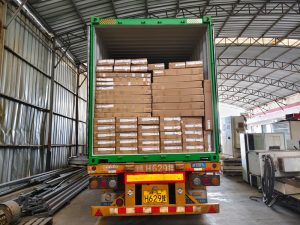
Once production is finished, the questions change. It’s no longer “can they make this correctly,” it’s “did this specific batch come out correctly.” That’s what a final random inspection, typically run using pre-shipment inspection once 80 to 100 percent of the order is complete and packed, is designed to answer. An inspector pulls a randomized sample sized according to AQL sampling rules and checks it against your specifications, your golden sample, and your defect classification criteria.
-
On-Site Testing vs. Sending Samples to an Accredited Lab
Not everything a final inspection catches needs a lab. Visual defects, functional checks with a portable tool, carton drop tests, and packaging accuracy can usually be handled on-site by the inspector at the factory. What can’t be reliably checked on-site is anything requiring instrumentation: material composition, chemical safety limits, flammability, electrical safety, or performance specs like load capacity and battery runtime. That’s where sending sealed samples to a third-party lab testing facility comes in, and for some product categories, it isn’t optional.
If you’re importing children’s products into the US, this isn’t a judgment call at all. Federal law requires nearly every children’s product to be tested by a third-party, CPSC-accepted laboratory before you can issue a Children’s Product Certificate. A factory’s in-house test report doesn’t satisfy this requirement, no matter how thorough it is. And it doesn’t end at the first certificate: under CPSC’s rules, a material change to the product or a component part triggers mandatory retesting, so a one-time lab report from your first order doesn’t necessarily cover a reorder if the supplier has swapped a fabric, a fastener, or a battery cell along the way.
| Stage | What it checks | Typical timing |
|---|---|---|
| Pre-production (golden sample approval) | Materials, components, design accuracy vs. spec | Before mass production begins |
| During-production inspection | Early production consistency, catching drift early | 20–40% of order complete |
| Final inspection (PSI/FRI) | Finished units vs. golden sample, AQL defect sampling | 80–100% complete, packed |
| Lab testing | Safety, chemical, performance specs requiring instrumentation | Pre-production samples and/or finished units, per regulation |
Why Skipping the Pre-Production Step Costs More Than It Saves
Here’s a scenario that plays out often enough to be worth walking through. Say you’re a first-time buyer working with a new factory on a private-label item with an embroidered logo. You send your artwork and specs, skip the sample approval step to save two weeks, and go straight to production. Production finishes, your inspector shows up for the final check, and finds the thread color used for the logo doesn’t match your brand guidelines. At 90 percent complete with the order already packed, your options are limited: accept an off-brand batch, or scrap it and restart, both of which cost far more than the two weeks a sample review would have taken.
This is what a golden sample step is actually insuring against. It’s cheap and fast relative to the alternative. A pre-production sample costs you a small delay and maybe a shipping fee. A specification drift caught at final inspection costs you the whole order, or a renegotiation with a supplier who now has your deposit and your deadline as leverage.
Building a Testing Timeline That Matches Your Product and Supplier
Not every order needs the full sequence. A repeat order from a proven supplier making a simple, low-risk product might only need a final inspection. A new supplier, a complex product, tight tolerances, or a regulated product category all argue for the full chain: golden sample approval, a during-production check partway through the run, a final inspection at completion, and lab testing wherever the product category requires it.
The pattern that tends to hold up: the newer the relationship and the higher the stakes if something goes wrong, the earlier in the process you want your first checkpoint. A first order with a new factory on a product headed for regulated retail shelves justifies testing before you’ve committed to a full production run. A tenth reorder of a simple item from a supplier with a clean track record can lean more heavily on the final check alone.
There’s also a question of who should hold the golden sample once it’s approved. Leaving the only copy at the factory is a common mistake. If it gets damaged, misplaced, or quietly “improved” by someone on the line who thinks they’re helping, you’ve lost your reference standard without knowing it. Most experienced buyers keep at least three copies: one at the factory for daily reference, one with the inspection company that will use it during checks, and one retained by the buyer as the final word if there’s ever a dispute about what was actually approved. Each copy should be dated, signed, and matched to the same written specification, so there’s no ambiguity about which version is authoritative if the factory’s copy and your copy ever disagree.
What This Means for Your Next PO
Before your next purchase order goes out, it’s worth deciding upfront, not after something goes wrong, which checkpoints this specific order actually needs. A new supplier or a complex product earns a golden sample review before production starts. Every order earns a final inspection sized to AQL standards. Regulated categories earn accredited lab testing, and that decision isn’t really optional once CPSC or a similar regulator is involved.
Getting this sequencing right is less about adding more inspections and more about putting the right check at the point where a problem is still cheap to fix. Whether you do product testing before or after production comes down to that one question, asked order by order, not answered once and forgotten.